Pages

Wednesday, January 26, 2011

KSAU: Hibah F-16 Tunggu Jawaban AS


Kamis, 27 Januari 2011 09:20 WIB
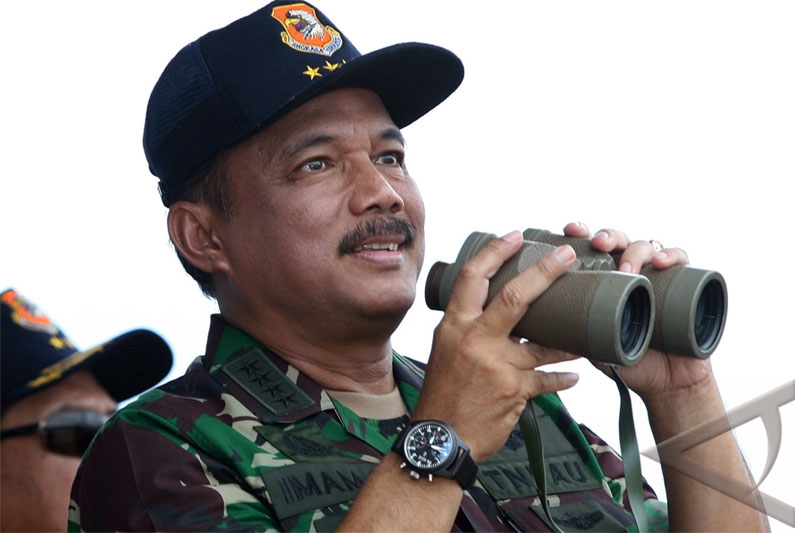
Kepala Staf TNI Angkatan Udara (AU) Marsekal TNI Imam Sufaat (FOTO ANTARA/Widodo S. Jusuf)
Kami berharap segera ada jawaban mengenai hal itu
Berita Terkait
Yogyakarta (ANTARA News) - Kepala Staf Angkatan Udara Marsekal TNI Imam Sufaat mengatakan, kepastian hibah pesawat tempur F-16 dari Amerika Serikat untuk Indonesia masih menunggu jawaban dari pemerintah negara adidaya itu.


F-16A Indonesia
Indonesian F-16

"Kami berharap segera ada jawaban mengenai hal itu," katanya di sela rapat pimpinan Tentara Nasional Indonesia (TNI) Angkatan Udara (AU) di Akademi Angkatan Udara (AAU) Yogyakarta, Senin.

Ia mengatakan, pihaknya telah mengajukan permintaan kepada AS terkait dengan hibah 24 pesawat tempur F-16 pada 2009, tetapi hingga kini belum ada jawaban dari si pemberi hibah.

"Belum adanya jawaban dari AS, kemungkinan karena banyak negara yang juga mengajukan permintaan hibah pesawat tempur F-16. Mereka juga ingin mendapatkan hibah pesawat tersebut," katanya.

Oleh karena itu, menurut dia, pihaknya melakukan pendekatan khusus kepada pihak yang berwenang di AS agar permintaan Indonesia mengenai hibah pesawat tempur F-16 disetujui dan direalisasikan secepatnya.

Ia mengatakan, TNI AU juga akan membeli pengganti pesawat OV-10 Bronco, helikopter, dan pesawat F-22, karena ada dana tambahan percepatan pengadaan alat utama sistem persenjataan (alutsista) sebesar Rp4 triliun.

"Dana tambahan tersebut, selain digunakan untuk pengadaan alutsista juga dipakai untuk perawatan dan pembelian suku cadang alutsista. Hal itu sesuai dengan program perencanaan strategis pembangunan TNI AU 2010-2014," paparnya.


ANTARA

Indonesia Looking for Trainer/Attack Aircraft

OV-10
USAF OV-10
(click to view full)
Super Tucanos bought; F-16 deal options; AJT/light attack shortlist. (Nov 11/10)
Indonesia is looking to replace its fleets of BAE Hawk Mk.53 trainer jets, and OV-10 Bronco forward air control/ counterinsurgency aircraft, as part of a more general modernization effort. That competition appears to be split in 2, and Brazil’s EMB-314 Super Tucano appears to be Indonesia’s choice to replace the OV-10s.
First, a bit of background. In 2007 the Indonesian Air Force purchased Russian SU-27SK and SU-30MKK fighters. The Flankers would supplement and/or replace fleets of F-16A/B and F-5E/F Tiger II fighters, whose condition was harmed by a long arms embargo imposed in response to widespread repression and genocide in East Timor. New fighters will need new trainers, and light attack/ forward air control/ surveillance aircraft are a high priority for a huge country with pockets of separatist unrest. First, however, the Air Force must secure the budgets to do so:
Potential Replacements
L-159T and L-159
AERO L-159T, L-159A
(click to view full)
East Timor became independent in 2002, and the American embargo on military supplies to Indonesia was lifted in 2005. Nevertheless, the effects of foregone maintenance can be lasting, and the experience was firmly etched into Indonesia’s military consciousness. Subsequent incidents, such as the UK’s injunctions against using British-made Scorpion light tanks against Aceh’s separatist revolt, only deepened the determination of Indonesia’s military and political leaders to deal with a different set of military suppliers. In the fall 2007 Indonesia signed a $1B+ defense credit agreement with Russia as the next step under that policy.
In January 2010, Indonesian air force commander Air Marshal Imam Sufaat identified 5 contenders for the trainer/ light atack replacement roles: Aero Vodochody’s L-159B from Czecheslovakia, Alenia Aermacchi’s M-346 Master from Italy, its Yakovlev Yak-130 counterpart from Russia, Chengdu’s FTC-2000 from China, the Korea Aerospace Industries/Lockheed Martin T-50 family. Later in January, Sufaat indicated the Air force’s desire to split the competition, designating Embraer’s EMB-314 Super Tucano as the preferred replacement for the OV-10.
The Czech Republic has been trying to sell up to 47 of its L-159 light attack aircraft on the global market. Meanwhile, South Korea’s T-50/ TA-50/ F/A-50 family of supersonic trainers and lightweight fighters has been growing. Indonesia’s 16 F-5 lightweight fighters have been out of operation since 2005, and some members of this family could effectively succeed those lightweight fighters for air policing as well.
Early Yak-130
Early Yak-130
(click to view full)
The Yak-130 was developed as a joint project by Alenia Aermacchi, and Russia’s Yakolev Design Bureau. The partners ended up going their separate ways, fielding 2-seat aircraft with similar lines but different internal equipment. By 2006 the aircraft had beaten the MiG-AT and Sukhoi’s S-54 to be selected as Russia’s next advanced jet trainer, and has also been sold to Algeria. There are also reports that Libya has 6 on order.
While Alenia’s M-346 Master emphasizes its role as an advanced trainer and aerobatic jet, the similar Yak-130 can also be heavily armed for air policing patrol, or counter-insurgency/ ground attack missions. Its NIIP Zhukovsky Osa radar offers adequate performance, and its 8 hardpoints can carry up to 3,000 kg/ 6,600 pounds of weapons. These reportedly include Western equipment like AIM-9L/Magic 2 short-range air-air missiles (SRAAM) and AGM-65 Maverick precision strike missiles; as well as Russian weapons like the advanced R-73/ AA-11 Archer SRAAM, a Platan targeting pod, the Vhikr and KH-25ML laser guided missiles, the KAB-500Kr guided bomb, 23mm or 30mm gun pods, or rockets and unguided bombs. The Yak-130 is powered by a pair of AI-222-25 or Povazske Strojarne DV-2SM (export option) turbofans.
The Yak-130 offers similar capabilities to Indonesia’s 8 existing Hawk 109 trainers, and may be actually more comparable to its 29 single-seat Hawk 209 light attack aircraft. Unlike the Tentara Nasional Indonesia Angkatan Udara’s (TNI–AU, Indonesia’s air force) 20 Hawk Mk.53 trainers, which were ordered in 1980-81 and reportedly have few operational planes left, these 1990s-era Hawk attack fleets remain operational, and are expected to remain in service with the TNI-AU.
China National Guizhou Aviation Industry’s JiaoLian-9, known as FTC-2000 Shanying (Mountain Eagle) when exported, is derived from China’s JJ-7 trainer. Which was, in turn, derived from Russian 2-seat MiG-21s. Visible enhancements include a raised cockpit that greatly improves visibility for both pilots, a correspondingly larger dorsal “spine”, a cranked delta wing to improve handling characteristics, and moving the engine intake from the plane’s nose to a pair of small side intakes.
The JL-9 uses a Chinese WP-13 or WP-14 turbojet engine, and carries Chinese electronics, and weapons. It reportedly packs an internal 23mm cannon, and has 5 stores stations that can carry up to 2,000 kg/ 4,400 pounds of fuel tanks, short-range air-air missiles, or rocket launders and unguided bombs. Its derivation from the MiG-21 gives it questionable suitability as a ground attack aircraft, but they could be used effectively for secondary air policing, especially if equipped with SELEX Galileo’s Grifo S7 radar. In August 2010, however, reports seemed to indicate that the JL-9 and M-346 had been dropped from Indonesia’s competition.
EMB 314
Super Tucano
(click to view full)
While Indonesia could have made a unified choice to replace its OV-10 FAC light attack and Hawk Mk53 trainer fleets with a multi-role jet, the demands of forward air control and counterinsurgency wars give slower and more stable platforms an advantage. The USA’s A-10 Thunderbolt/Warthog is Exhibit A in this respect, but it is no longer in production. Propeller-driven options are emerging as the preferred choices beyond the USAF, and Embraer’s EMB-314 Super Tucano trainer/ FAC/ light attack turboprop has built a strong global lead with sales to its home country of Brazil (99), as well as Colombia (25), Chile (12), the Dominican Republic (8), and Ecuador (18). Indonesia appears to have chosen it as well, and interest has even been reported in US SOCOM, and in Britain.
One potential wrinkle for the predominantly Islamic country of Indonesia could involve the fact that to date, the aircraft has been produced with a dedicated avionics and weapons management suite from Israeli firm Elbit Systems, via its Brazilian subsidiary AEL. Indonesia could decide that the general Islamic boycott of the Jewish state doesn’t apply, on the grounds that the equipment is in fact from Brazil. It could also decide to order the plane with an avionics and weapons management suite from a different manufacturer, such as Rockwell Collins or Thales. If their choice hasn’t already been integrated and tested in the Super Tucano, however, the need to take those steps would likely increase the cost of their order.
Indonesia had other options, beyond the Super Tucano. One option would involve defaulting to a common replacement jet for the Hawks and OV-10s. Another would involve work with a foreign country like China or South Korea to modify an existing aircraft as their OV-10 replacement. A 3rd involves buying a ready-made Super Tucano alternative. Switzerland’s Pilatus reportedly chose not to offer its aircraft to Indonesia, but propeller-driven FAC/COIN options already in the market include Hawker Beechcraft’s AT-6B (modified T-6 trainer, in development), and the cheaper, sturdier AC-802u Air Tractor (modified and armored crop duster/ firefighter, prototype produced). Both are American products. Korea’s KO-1 Woong Bee armed derivative of its KT-1 trainer is reportedly in limbo, but a Jan 26/10 release casts doubt on those reports. Indonesia has reportedly already bought some KT-1s which made the KA-1/KO-1 a strong joint development or purchase option. n the end, however, the Super Tucano won.
Contracts and Key Events
Indonesia
Indonesia
Nov 11/10: Indonesia signs a Memorandum of Understanding with Embraer at the Indo Defense 2010 exhibition in Jakarta. Indonesia will order 8 EMB-314 Super Tucanos at first, with an option for another 8 on the same terms. The first Super Tucanos will arrive in 2012 , and the order also includes ground-support stations and a logistics package. Defense Minister Purnomo Yusgiantoro added that state aircraft maker PT Dirgantara Indonesia would be used for maintenance work, and they also hoped Digiranta would wind up manufacturing some parts and components. Embraer | Jakarta Post | Aviation Week | Flight International | MSN Malaysia | UPI.
F-16A Indonesia
Indonesian F-16
Nov 11/10: Indonesia is considering some F-16 related requests that could be complementary to its light attack plane buy, or could compete with it, depending on what kind of funds are made available. Deals under consideration include a $150 million mid-life upgrade and repairs to its 10 Lockheed Martin F-16A/Bs, a 2nd buy of fully modern F-16C/D Block 50/52s to bring the squadron up to full strength, and a reported American offer of 24 cheap, used F-16 Block 25/30s from USAF stocks.
These deals could wind up being parallel buys, but Indonesia has limited finances. Its government could decide that with the Super Tucanos in hand, a force of multi-role fighters is a better option than trainer/light attack aircraft, until its KF-X partnership with South Korea produces an F-16 Block 50-60 equivalent successor by about 2025. Alternatively, it could stick to its declared priorities, and decide it can’t afford to upgrade and maintain more F-16s. There have been some rumbles to that effect already, but a decision is still pending.
If the F-16 mid-life upgrade takes place, it will extend their service life from 4,000 to 8,000 flight hours, and modernize them to F-16 Block 40-50 capability. Each aircraft would reportedly require a year of work to finish modernization, with the batch work to be conducted in Indonesia using kits provided by Lockheed. Flight International | Jakarta Post | UPI | China’s Xinhua press agency.
Aug 9/10: Air Forces Monthly reports that Indonesia’s Defense Acquisition Program Administration has narrowed its 16 plane advanced jet trainer and light attack aircraft order to the Czech Aero L-159B, South Korea’s T-50 Golden Eagle, and Russia’s Yak-130. That leaves both Alenia’s M346 Master and China’s JL-9/FTC-2000 out in the cold.
Interestingly, the common denominator for the 2 eliminated types is poor secondary ground attack capabilities.
April 22/10: Flight International reports that Indonesia’s air force still wants 8 Super Tucanos, with an option for more. What’s holding up the deal is the need for approval from the defence ministry, which is “conducting its own technical evaluation.”
Indonesia also has a history of individuals conducting private financial evaluations for defense purchases, which include private gain. It is not possible to say whether that is a factor in this deal.
Jan 26/10: The Jakarta Post quotes Indonesian Air Force Chief Marshal Imam Sufaat, who says that Embraer’s Super Tucano trainer/ FAC/ light attack aircraft as “the suitable and affordable choice” to replace their aged OV-10 Broncos: “We have proposed the purchase to the government with the hope that they will grant the funds.” He declined to mention aircraft numbers or budgets. If OV-10 replacement funds are approved this time, a firm contract can be signed with the Brazilians.
On the other hand, Investe Sao Paulo reported in October 2009 that Indonesia had already signed a contract for 8 Super Tucanos. See Oct 16/09 entry.
Meanwhile, Coordinating Political, Legal and Security Affairs Minister Djoko Suyanto was quoted as saying that Indonesia was looking into the possibility of buying weapon systems, including warplanes, from China, and forging bilateral cooperation in weapon systems development.
This has obvious implications for the Hawk Mk53 trainer replacement effort, and could affect Indonesia’s FAC/COIN aircraft efforts if the Super Tucano sale falls through for some reason.
Jan 14/10: Flight International reports that Indonesia’s military is about to renew a request for funds to finance its purchase of trainer and attack aircraft. The service submitted requests to replace its OV-10s in 2008, and 20 Hawks in 2009, but the government did not approve the budgets. A faster-than-expected economic recovery may offer a new opportunity, and Indonesian air force commander Air Marshal Imam Sufaat has reportedly said that the OV-10 replacement has been approved, while the Hawk replacement remains under discussion.
Nov 13/09: The Jakarta Post quotes newly sworn-in Indonesian Air Force chief of staff Vice Marshal Imam Safaat, who says that Russian Yak-130s and Chinese FTC-2000s would replace Indonesia’s 20 remaining British Hawk Mk.53 trainer jets (2 reportedly operational), and remaining American OV-10 Bronco turboprops (0-8 operational).
At this point, this is pre-budget intent, and not a contract. The age of Indonesia’s Hawk and Bronco fleets, and the importance of training, will add urgency to this request. Imam said that these aircraft are “expensive” and would be bought with the help of foreign aid.
The new TNI-AU chief added that the service also plans to replace its 16 F-5E/Fs (4 reportedly operational) by 2013.
Indonesia’s economy has performed well in recent years, and the TNI-AU budget is expected to increase by 25%-75% over the next year, adding $105-320 million. Nevertheless, a verdict that even the Yak-130 and FTC-2000 are expensive could suggest these very aircraft for the F-5’s roles. Both designs are capable of handling those roles at comparable performance levels, and the shrinkage of Indonesia’s front-line combat fleet makes a large array of single-focus trainers a dubious proposition, unless ample money is available for more front-line fighters as well. The flip side of that choice is that beyond the Yak-130’s strong close air support capabilities, these 2 choices would not be competitive with modern fighters.
Alternatively, Indonesia could cast a wider net, and look to purchase both replacement trainers, and low-budget dedicated fighters like the Chinese/Pakistani JF-17 Thunder, India’s Tejas, or South Korea’s TA-50 Golden Eagle to replace its F-5s. A more ambitious effort might even examine higher-end lightweight fighters like the Russian MiG-29/35, Chinese J-10, or the Swedish JAS-39 Gripen flown by nearby Thailand. Of these lightweight fighter choices, the Russian MiG-29/35 and Chinese JF-17 or J-10 are the only options that would be immune to future western military sanctions. All of the other choices currently fly with General Electric turbofan engines, and are slated to continue using western designs.
Oct 16/09: Investe Sao Paulo reports that Embraer has closed the sale of 8 Super Tucano aircraft to the Air Force of Indonesia:
“The information was disclosed yesterday by the Air Force commander, Brigadier Juniti Saito, during the certification event for the VSB-30 sub-orbital rocket and the test of the engine of the VS-40 sounding rocket, at the Department of Aerospace Science and Technology (DCTA, in Portuguese) in Sao Jose dos Campos. Asked by Valor [Economico], Embraer informed through its spokesperson it would not make any announcements on the operation.”

http://www.defenseindustrydaily.com/Indonesia-to-Buy-Russian-Chinese-TrainerAttack-Aircraft-05947/
Tak Ada Tekanan AS dalam Sidang Video Kekerasan TNI di Papua


Jubir Kemlu RI menegaskan Jumat siang, pemerintah sama sekali tidak mendapatkan tekanan dari pihak manapun dalam sidang peradilan ini.
Pelajar Papua Barat saat protes untuk perjuangan HAM tahun 2008.
Foto: ASSOCIATED PRESS
Pelajar Papua Barat saat protes untuk perjuangan HAM tahun 2008. Indonesia menegasakan tidak adanya tekanan dalam sidang video penyiksaan warga Papua.

Pemerintah Indonesia menegaskan, tidak pernah mendapatkan tekanan dari pihak manapun, termasuk dari Amerika Serikat, terkait persidangan kasus video kekerasan terhadap warga sipil di Papua, yang dilakukan sejumlah perwira TNI.
Pada persidangan yang digelar Kamis siang, Oditur Militer menurunkan tiga tuntutan yang berbeda kepada tiga anggota TNI pelaku video kekerasan jilid II, yang terjadi di kampung Gurage, Distrik Tingginambut, Puncak Jaya, pada Mei 2010.
Sersan Dua Irwan Riskianto, sebagai Wakil Komandan Pos Gurage, dituntut paling berat yakni satu tahun. Sementara dua anggotanya, Prajurit Satu Thamrin Mahangiri dan Prajurit Satu Yapson Agu, masing-masing dituntut 9 dan 10 bulan penjara dipotong masa tahanan sementara.
Menanggapi persidangan ini, Juru Bicara Kementerian Luar Negeri, Michael Tene, di Jakarta, Jumat siang, menegaskan pemerintah sama sekali tidak mendapatkan tekanan dari pihak manapun; termasuk Amerika Serikat. TNI bahkan telah melakukan penyelidikan dan mengidentifikasi para pelaku, sekaligus membawa mereka ke pengadilan militer, sesuai perintah Presiden Yudhoyono.
Michael Tene menambahkan, sikap pemerintah untuk segera menggelar persidangan menyangkut kasus tersebut, mencerminkan keseriusan pemerintah Indonesia dan TNI, yang siap menjalankan komitmen untuk menegakkan Hak Asasi Manusia.
Sementara itu, Atase Pers Kedutaan Besar Amerika Serikat di Jakarta, Paul Belmont, kepada VOA, mengakui pejabat Kedutaan Besar Amerika di Jakarta ikut memantau jalannya persidangan, dan tetap mengadakan pertemuan rutin untuk menyamakan pandangan mengenai kasus ini, dengan pihak-pihak keamanan di Indonesia.
Menjelang pembacaan vonis pada 24 Januari mendatang, pemerintah Amerika Serikat belum bersedia memberikan pernyataan apapun. Namun, laporan berkala selalu dikirimkan ke Washington. Paul Belmont mengatakan, pihaknya sangat menyambut baik keputusan TNI dan pemerintah untuk menggelar sidang pengadilan militer yang terbuka dan transparan.
Di sisi lain, sistem peradilan militer tidak selamanya memberikan putusan yang adil kepada pelaku. Hal ini pernah terjadi pada kasus penganiyaan warga sipil di Aceh. Ironisnya, kasus-kasus ini selalu menimpa perwira berpangkat rendah.
Direktur Eksekutif lembaga pemantau HAM, Imparsial, Poengky Indarti, mengatakan, “Dulu kami pernah protes ketika ada kasus penganiayaan oleh aparat keamanan terhadap perempuan di masa darutat militer di Aceh. Mereka hanya dihukum beberapa bulan, dan Biasanya ini menimpa mereka yang pangkatnya rendah, sementara pimpinan-pimpinannya yang pangkatnya lebih tinggi itu tidak diadili.”
Kemungkinan lain yang harus diwaspadai adalah vonis pada tingkat banding yang bahkan dapat menjadi lebih ringan, dan ini tentu tidak membawa keadilan bagi korban, kata Poengky Indarti.

BBC

Tiongkok Bantah Jiplak Teknologi Pesawat AS


Para pejabat Tiongkok menepis tuduhan bahwa pesawat tempur J-20 Tiongkok meniru pesawat Nighthawk F-117 Amerika.
Pesawat tempur J-20 Tiongkok terlihat di Chengdu, provinsi Sichuan, beberapa pekan lalu.
Foto: REUTERS
Pesawat tempur J-20 Tiongkok terlihat di Chengdu, provinsi Sichuan, beberapa pekan lalu.

Media negara Tiongkok membantah laporan bahwa teknologi yang digunakan dalam pesawat tempur silumannya yang baru didasarkan pada komponen dari pesawat tempur Amerika yang ditembak jatuh dari angkasa Serbia. Para pejabat Tiongkok menepis tuduhan tersebut sebagai upaya media asing untuk menjelek-jelekkan Tiongkok.
Surat kabar resmi Global Times juga mengutip seorang pilot yang mencoba pesawat tersebut, mengatakan pesawat tempur J-20 Tiongkok yang baru jauh lebih canggih dari pesawat Nighthawk F-117 Amerika yang ditembak jatuh pada tahun 1999.
Laporan media pekan ini mengutip mantan pimpinan militer Kroasia yang mengatakan agen-agen Tiongkok membeli komponen pesawat Nighthawk yang hancur dari petani setempat setelah pesawat itu ditembak jatuh dalam serangan pemboman dalam Perang Kosovo.  Laksamana Kroasia tersebut mengatakan ia yakin para insinyur Tiongkok mempelajari  komponen untuk mengembangkan teknologi siluman yang memungkinkan pesawat terbang menghindarkan deteksi radar dan peralatan lain.
Tetapi, seorang pejabat kementerian pertahanan Tiongkok yang dikutip oleh Global Times mengatakan ini bukanlah pertama kalinya media asing menjelek-jelekkan teknologi militer Tiongkok. Ia menambahkan tidak ada manfaatnya untuk menanggapi spekulasi demikian.

BBC

Siluman dari Pesawat AS yang Jatuh di Serbia

Agen-agen Tiongkok diduga membeli bagian-bagian pesawat F-117 AS yang jatuh tahun 1999 dan diambil oleh para petani Serbia.
Foto: REUTERS
Pesawat tempur siluman Tiongkok terlihat di bandara Chengdu, provinsi Sichuan, 7 Januari 2011. Pesawat ini diduga meniru teknologi pesawat F-117 milik AS yang jatuh di Serbia.

Media internasional kini berspekulasi bahwa Tiongkok kemungkinan belajar membangun sebuah pesawat tempur siluman sebagian lewat mempelajari pesawat Amerika yang ditembak jatuh di atas Serbia pada 1999.
Pesawat F 117 Nighthawk Amerika ditembak jatuh dengan misil darat ke udara Rusia selama sebuah serangan pemboman, dan merupakan satu-satunya pesawat dilengkapi dengan teknologi menghindari radar yang pernah ditembak jatuh.
Associated Press mengutip Kepala Staf Kroasia selama Perang Kosovo, Laksamana Davor Domazet-Loso, sebagai mengatakan, agen-agen Tiongkok menyebar ke seluruh daerah di mana pesawat jatuh, dan membeli suku cadang yang diambil oleh para petani sebagai suvenir.
Domazet Loso, yang mendasarkan informasinya pada laporan intelijen Kroasia, mengatakan kepada AP, ia yakin insinyur Tiongkok mempergunakan suku cadang itu untuk “memperoleh pemahaman tentang teknologi menghindari radar.”

BBC

France-Russia sign Mistral warships deal

France-Russia sign Mistral warships deal

France on Tuesday inked a lucrative agreement to sell four Mistral warships to Moscow, with two to be built in Russia, in a move bitterly opposed by ex-Soviet states in the Baltics.
The deal for the amphibious assault ships will be the first sale to Russia of such technology by a NATO country.
France's NATO allies -- in particular Lithuania, Latvia and Estonia -- have expressed concern about arming Russia with modern Western weaponry.
Leaked diplomatic cables showed that US Defence Secretary Robert Gates also raised Washington's concerns while on a visit to Paris last year.
The deal was announced while President Nicolas Sarkozy was visiting the STX naval shipyards in the western port of Saint-Nazaire where the vessels will be built in partnership with France's state-owned military contractor DCNS.
"The governments of the two countries agree to give their full support to the construction of two (warships) in France and two in Russia," said a joint French-Russian statement released by the French presidency.
Sarkozy told shipworkers in Saint-Nazaire that the deal represented six million hours of work and 1,500 jobs over four years.
A previous deal announced late last month concerned the construction of two Mistrals in Saint-Nazaire and mentioned the possibility of building two more.
The deal unveiled Tuesday did not mention how much technology France would transfer to the Russians to enable them to build the ships, nor did it mention how much the ships were being sold for.
France has been negotiating with Russia since 2009 on the deal to sell Moscow the Mistral, which is priced at around 500 million euros (680 million dollars).
Russian state shipbuilder OSK boss Roman Trotsenko told Interfax news agency that the unit price agreed was "less than 600 million euros."
STX shipbuilder said the first Mistral would be delivered in December 2013 and would be 80 percent built in France and 20 percent in Russia.
A Mistral-class ship can carry up to 16 helicopters, four landing craft, 13 battle tanks, around 100 other vehicles and a 450-strong force. It has facilities for a full command staff and is equipped with a 69-bed hospital.
The Russian army has said such a ship would have helped it win its August 2008 war with ex-Soviet neighbour Georgia within hours rather than days.
Lithuania, Latvia and Estonia -- states ruled by Moscow until 1991 -- have repeatedly criticised France's plans since Paris began negotiating the warship sale.
The Kremlin only withdrew its troops from their territory in 1994, three years after they won independence when the communist bloc collapsed.
The three states, with a combined population of 6.8 million, still have rocky relations with Russia, notably since they joined NATO and the European Union in 2004.
Senior Republican US Senator John McCain sharply condemned the sale of the four warships, calling it "a threat to some of America's friends and NATO allies."
"I strongly oppose France's sale of the Mistral to Russia," he said.
"This ship is a threat to some of America's friends and NATO allies, and I worry that this decision could set a troubling precedent within NATO of advanced weapons sales to the Russian government," said McCain.

DEFENCE TALK

DTI Will Continue Other Project : UAV, AAV


27 Januari 2011

DT-1 multiple launch rocket system (photo : TAF)

New rocket battalion planned

The army has plans for a new battalion to be equipped with multi-barrel rocket launchers (MBRLs), attached to the existing Lop Buri-based Artillery Division, an army source said.

Under the plan, a large number of MBRLs will be bought from the Defence Technology Institute (DTI), an organisation under the Defence Ministry.

DTI, in collaboration with the army of China, has produced a prototype DTI-1 MBRL, using technology transferred from China.

On Monday, Defence Minister Prawit Wongsuwon and army chief Prayuth Chan-ocha visited the Artillery Division in Lop Buri where they took receipt of the first of the MBRLs developed by DTI.

MBRL systems are in wide use with the Cambodian military, which has large numbers of them.
The source said the plan ned new battalion has the support of the prime minister, who sees it as a way of boosting the army's capability.

China has transferred WS-1B technology to DTI (photo : Military Today)
At the hand-over ceremony, Gen Prayuth said it has been the army's wish since 1988 to have a rocket company. At present, the defence minister has approved in principle the development of MBRLs and the newly developed weapon has been tested.

Lt-Gen Thitinan Tunyasiri, the DTI director, said the MBRL prototype is very important as its technology can be use to develop a guided missile system to respond to demands from various army units.

In the near future, the DTI will proceed with other projects to build unmanned aerial vehicles (UAV), signal jammers, combat auxiliary systems, and amphibious assault vehicles (AAV), to reduce reliance on imports from abroad, he said.

(Bangkok Post)

BERITA POLULER