Pages

Sunday, August 7, 2011

KRI Banda Aceh Angkut Bantuan Sosial


Wahyu Wening / Jurnal Nasional
Jurnas.com | SALAH satu kapal perang jajaran Komando Lintas Laut Militer (Kolinlamil) jenis Landing Platform Dock (LPD) KRI Banda Aceh-593 mengangkut personel dan material bantuan sosial untuk mendukung kegiatan Ekspedisi Kesra Nusantara (EKN) ke wilayah barat Indonesia.

Ekspedisi Kesra Nusantara ini merupakan kegiatan yang baru pertama kali dilaksanakan dengan menggelar suatu Upacara Pelepasan Ekspedisi Kesra Nusantara yang dipimpin langsung oleh Inspektur Upacara Menteri Koordinator Kesejahteraan Rakyat (Menkokesra) Agung Laksono di Geladak Helly KRI Banda Aceh-593 yang sandar di Dermaga Kolinlamil, Tanjung Priok, Jakarta, Minggu (7/8)

Agung Laksono menjelaskan EKN diselenggarakan dalam rangka memperingati Hari Proklamasi Kemerdekaan RI ke-66. Selain itu, EKN juga bertujuan untuk menumbuhkan rasa cinta Tanah Air dan kepedulian sosial kepada masyarakat yang bermukim di daerah terpencil meliputi Manggar, Karimata, Pulau Tambelan Besar, Ranai, Pulau Laut, Tarempah Kepulauan Anambas, Pulau Jemaja, Pulau Lingga dan Pangkal Pinang.

Kegiatan ini merupakan komponen kegiatan Sail Wakatobi-Belitong yang mencakup kegiatan bantuan sosial, pasar murah dan penyuluhan serta hiburan masyarakat untuk meningkatkan kesejahteraan masyarakat di daerah terpencil yang akan dikunjungi khususnya dalam menyediakan kebutuhan pokok menjelang lebaran.

Dalam ekspedisi ini, KRI Banda Aceh yang dikomandani oleh Letkol Laut (P) May Franky Pasuna Sihombing ini akan membawa berbagai macam barang bantuan sosial, alat-alat kesehatan maupun sembako yang natinya akan dijual kepada masyarakat di wilayah yang disinggahi dengan harga murah. Selain itu juga akan onboard di kapal perang, Komandan Satgas EKN 2011, Dr. Hartoyo Soehari, Staf ahli Menko Kesra bidang Usaha Mikro, Kecil dan Menengah dan Ekonomi Kreatif bersama 18 personel lainnya dari Kemenkokesra, Kominfo, BKKBN dan Perpustakaan Nasional.

Kegiatan yang dilakukan Kemenkokesra selama 20 hari ini terselenggara berkat dukungan berbagai pihak dari unsur Instansi Pemerintah Pusat dan Daerah, diantaranya Solidaritas Isteri Kabinet Indonesia Bersatu (SIKIB) II , TNI AL, Kementerian BUMN, Kementerian Kesehatan, Kementerian Agama, Kementerian KUKM, Kemendiknas, Kementerian Kelautan dan Perikanan, Kementerian Perdagangan, Kemendagri, Kemensos, Kementerian PDT, BKKBN, Bulog, Perpusnas dan sejumlah BUMN serta perusahaan swasta mulai tanggal 8 hingga 28 Agustus 2011.

Hadir pada upacara pelepasan Ekspedisi Kesra Nusantara 2011, Menteri Agama Suryadharma Ali, Menteri Sosial Salim Segaf Al-Jufri, Panglima Komando Lintas Laut Militer, Laksamana Muda TNI Didit Herdiawan, para pejabat dari instansi Pemerintah, jajaran TNI, BUMN maupun swasta.

JURNAS

TNI Lebih Pilih Impor daripada Pindad


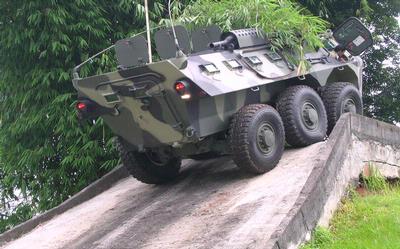
Panser Anoa buatan PT Pindad diuji di jalur menanjak, datar, dan turun, di Bandung, Jumat (15/1/2010). Selain sudah digunakan pasukan perdamaian di Lebanon, panser berbobot 14 ton ini juga menarik minat Malaysia. 

BOMB TAJAM BT-250
 

BANDUNG, KOMPAS.com — PT Pindad, Badan Usaha Milik Negara yang bergerak dalam produksi persenjataan perang, mengaku kesulitan menjual produk buatannya pada pemakai terbesar di dalam negeri, yakni Tentara Nasional Indonesia (TNI).
Untuk beberapa jenis senjata, TNI memilih impor daripada membelinya dari dalam negeri, PT Pindad.
"Contohnya, bom tajam BT-250. Kami sudah menawarkan produk ini sejak 10 tahun, tetapi belum juga diambil sampai sekarang," ujar Direktur Utama PT Pindad Adik Avianto Soedarsono di Bandung, Jawa Barat, Minggu (7/8/2011), saat memaparkan materi tentang Dukungan PT Pindad (Persero) Dalam Membangun Pertahanan dan Keamanan Negara kepada Menteri Koordinator Perekonomian Hatta Rajasa.
Menurut Adik, tahun 2011, Pindad belum menandatangani satu kontrak pembelian pun dengan TNI, akibat lambatnya proses anggaran. Padahal, TNI adalah pangsa pasar Pindad yang terbesar, yakni 80 persen dari total penjualan.
"Kami perkirakan penjualan ke TNI bisa mencapai Rp 900 miliar, sedangkan ke Polri hanya Rp 8 miliar. Sehingga total penjualan mencapai Rp 1,4 triliun," ujarnya.
Adik menyebutkan, harga jual senjata yang ditawarkan rata-rata masih jauh lebih murah dibandingkan senjata yang dibeli TNI. Sebagai contoh, senjata khusus penembak jitu (sniper) yang dimiliki TNI mencapai Rp 450 juta per unit, padahal Pindad punya yang nilainya Rp 150 juta per unit.
"Ini sempat dijadikan dengan anggaran yang sama besar, dari 30 unit bisa menjadi 100 unit kalau beli dari Pindad," katanya.
Menteri Koordinator Perekonomian Hatta Rajasa menegaskan, Pindad termasuk industri strategis yang membutuhkan dukungan. Pemerintah sudah menegaskan, seluruh persenjataan yang bisa dibuat di dalam negeri harus dibeli dari industri dalam negeri.
"Sinergi antar-BUMN dan pengembangan riset akan dapat memecahkan masalah yang dihadapi Pindad," ujarnya.

KOMPAS

Malaysia Pesan 23 Unit Panser Pindad


Sebanyak 40 panser Anoa 6x6 buatan PT Pindad berjajar rapi sesaat sebelum serah terima dari Departemen Pertahanan RI untuk keperluan TNI di area PT Dirgantara Indonesia, Jumat (10/7). Foto: TEMPO/Prima Mulia

Berita terkait


<a href='http://openx2.tempointeraktif.com/www/delivery/ck.php?n=a6f00733&cb=' target='_blank'><img src='http://openx2.tempointeraktif.com/www/delivery/avw.php?zoneid=400&cb=&n=a6f00733' border='0' alt='' /></a>
TEMPO Interaktif, BANDUNG- Pemerintah Malaysia memesan 23 unit panser buatan PT Pindad tahun ini. "Prosesnya sudah sampai Perdana Menteri Malaysia, Departemen Pertahanan mereka sudah oke," kata Direktur Utama Pindad Adik Avianto Soedarsono di Bandung Ahad 7 Agustus 2011.

Panser yang dibanderol Rp 7 miliar per unit itu, menurut Adik, makin diminati setelah diakui oleh Perserikatan Bangsa-Bangsa. Adik mengatakan panser buatan putra-putri Indonesia itu telah digunakan dalam menjaga perdamaian di Lebanon. "Sebanyak 13 unit telah digunakan di Lebanon," katanya.


Panser pesanan Malaysia, katanya, perangkat mesinnya tidak lagi menggunakan buatan Renault, melainkan menggunakan mesin Mercedes-Benz. “Karena Renault kini menjadi pesaing PT Pindad dalam memasok kendaraan ke Malaysia, sehingga harus mengganti komponen mesin,” ujarnya.


Namun demikian, PT Pindad belum memastikan apakah panser yang akan dijual ke Malaysia akan menggunakan mesin Benz. Adik mengemukakan ada dua pilihan mesin yang akan dipakai untuk panser tersebut, yaitu Mercedes-Benz atau Deutz yang hampir sama dengan mesin Renault berkapasitas 7.000 cc dan berkekuatan 320 tenaga kuda.


Juli lalu, rencana pembelian itu disampaikan  Panglima Angkatan Tentera Malaysia Jenderal Tan Sri Datu Sri Zulkifli Mohammad Zein saat bertemu dengan Presiden Susilo Bambang Yudhoyono dan Panglima TNI Laksamana Agus Suhartono di Istana Kepresidenan.


Anggota Komisi Pertahanan Dewan Perewakilan Rakyat Teguh Juwarno mengatakan Pindad harus pintar-pintar dalam menerima permintaan luar negeri. "Jangan sampai alutsista (alat utama sistem pertahanan) kita sama atau malah lebih bagus mereka (Malaysia)," ujarnya. Menurut Teguh Pindad harus mengutamakan permintaan dari Tentara Nasional Indonesia.

Friday, August 5, 2011

The Royal Australian Air Force F/A-18 Hornet

F/A-18 Hornet Image
The Royal Australian Air Force F/A-18 Hornet is a multi-role fighter designed for both air-to-air and air-to-ground missions. It is capable of air interception, air combat, close air support of ground troops, and interdiction of enemy supply lines including shipping.

The Hornet is operated by:

Hornet weapons include:

  • 20mm nose-mounted cannon
  • wide range of air-to air and air-to-surface missiles
  • laser-guided and conventional bombs.
The Hornet is capable of air-to-air refuelling from our old Boeing B-707 aircraft and the new KC-30A Multi-Role Tanker Transports .
F/A-18 Hornet on white background The Hornet was developed for the US Navy and Marine Corps and has been a very successful aircraft. It is also used by Canada, Finland, Kuwait, Malaysia, Spain and Switzerland. The fleet has just undergone a major avionics upgrade to ensure effective operations for the next 10 to 15 years.
Air Force will obtain 24 Boeing F/A-18F Super Hornets by 2010 to ensure Australia's air combat capability edge is maintained until the full introduction into service of the F-35 Lightning Joint Strike Fighter.

Related links

Boeing F/A-18 Hornet technical specifications
Manufacturer Boeing (originally McDonnell-Douglas)
Role Multi-role fighter
Crew One or two
Engine Two low-bypass F404-GE-400 turbofans (7,258kg thrust each)
Airframe Length: 17.1m, height: 4.7m
Wingspan 12.4m
Weight 10,660kg basic, 20,412kg maximum
Speed Mach 1.8 (2,200km/h)
Range
  • Ferrying 2,700km (without refuelling)
  • Interdiction over 1,000km
  • Combat radius 740km
Ceiling Above 45,000 feet
Weapons
  • AIM-120 AMRAAM active radar guided missiles
  • AIM-7 Sparrow radar-guided long-range missiles
  • AIM-9 Sidewinder infra-red seeking missiles
  • Harpoon anti-ship missiles
  • conventional and laser-guided bombs
  • M61 20mm nose-mounted cannon
Avionics
  • Hughes APG73 multi-mode radar
  • GPS
  • inertial navigation system
  • VHF omni-directional range/instrument landing system
  • two mission computers
  • head-up cockpit display
  • multi-functional cathode ray tube displays 
SOURSCE :http://www.airforce.gov.au/Aircraft/hornet.aspx

The Royal Australian Air Force F/A-18F Super Hornet

superhornet Aircraft


Super Hornet flying operations are being assessed through a Public Environment Report process. For information about this process visit the Super Hornet PER website.
The Royal Australian Air Force F/A-18F Super Hornet will give Australia an upgraded air combat capability for both air-to-air and air-to-ground missions until the full introduction into service of the F-35 Lightning II Joint Strike Fighter (JSF). Twenty-four Super Hornets will replace the F-111s at Nos 1 and 6 Squadrons at RAAF Base Amberley from 2010.
The introduction of Super Hornets minimises the risk of a possible future capability gap if the JSF program were to fall behind schedule. It also allows the F-111s to be retired at a time of our choosing.
The original Hornet was developed for the US Navy and Marine Corps and has been a very successful aircraft, including over 20 years exemplary service with the Royal Australian Air Force. The US Navy took delivery of its first Super Hornet in 1999. Super Hornets are larger than the original models with many detail improvements. Their increased wing area allows them to carry more stores further on their extra hardpoints. They are most easily recognised by their rectangular engine air intakes.
Super Hornets give the Air Force a relatively easy upgrade path, given our experience with Hornet maintenance and two-crew operations with both Hornets and F-111s.

Boeing F/A-18F Super Hornet technical specifications
Manufacturer Boeing
Role Multi-role fighter
Crew Two
Engine Two low-bypass F414-GE-400 turbofans (9,800kg thrust each)
Airframe Length: 18.3m, height: 4.9m
Wingspan 13.6m
Weight 13,387kg basic, 29,900kg maximum take-off weight
Speed Mach 1.6 (1,960km/h)
Range
  • Ferrying 2,700km (without refuelling)
  • Interdiction over 1,000km
  • Combat radius 740km
Ceiling Above 50,000 feet
Weapons
  • AIM-120 AMRAAM active radar guided missiles
  • AIM-7 Sparrow radar-guided long-range missiles
  • AIM-9 Sidewinder infra-red seeking missiles
  • Harpoon anti-ship missiles
  • conventional and laser-guided bombs
  • M61 20mm nose-mounted cannon
Avionics
  • Hughes APG-79 multi-mode radar
  • GPS
  • inertial navigation system
  • VHF omni-directional range/instrument landing system
  • two mission computers
  • head-up cockpit display
  • multi-functional cathode ray tube displays
SOURSCE : http://www.airforce.gov.au/Aircraft/SuperHornet.aspx

india given choice to pioneer naval Typhoon jet

India given choice to pioneer naval Typhoon jet


By IANS on Wednesday, August 3rd, 2011

In anticipation of winning the Indian Air Force's $10.4 billion tender for 126 combat jets, European consortium EADS has offered India a choice to pioneer a project for a naval version of the Eurofighter Typhoon that is in the fray in what is being described as the "mother of all defence deals".
Typhoon's competitor in the medium multi-role combat aircraft (MMRCA) tender, the French firm Dassault's Rafale, already has a naval version that is operational on France's lone nuclear-powered aircraft carrier Charles de Gaulle.
Officials of BAE Systems, one of the four partner companies in EADS for the Typhoon programme, told IANS during a visit to their RAF Warton production facility in Britain recently that India can exercise the choice of being a partner nation and leading the programme for the carrier-borne version of the aircraft if it wins the MMRCA tender. At present, Britain, Italy, Spain and Germany are partners in the Typhoon programme.
According to the BAE Systems officials, the Typhoon, which is a shore-based combat jet, has the potential to be a carrier-borne aircraft, provided a few modifications are made to the aircraft itself, essentially in a ski-jump take-off configuration due to the thrust-vectoring 90 kN (kilo Newton) engine that powers it.
Among the changes, it identifies strengthening of the undercarriage of the aircraft to assist in hard landings on a carrier's deck, fitting a carrier hook for arrested landings, and a good paint coating to help it withstand the vagaries of nature at sea.
The choice of the Typhoon for the Indian Navy the officials said, will complement the experience of operating the British Sea Harrier vertical-landing carrier-borne aircraft on board its lone aircraft carrier, INS Viraat, for over two decades now. Of the nearly 30 Harriers India had got for INS Viraat, only about 10 are left in service, with the rest lost in air crashes.
The offer has been made keeping in mind the Indian Navy's request for information issued in 2009. But the Indian Navy itself is not very amused with the offer.
First, according to officials, the Indian Navy plans to induct the Russian-built Admiral Gorshkov or INS Vikramaditya in the next couple of years. This warship will deploy Russian MiG-29K naval fighter jets and for this, the vessel is being reconfigured into a ski-jump take-off but arrested landing (STOBAR) mode at the Sevmash shipyard in Russia.
The same aircraft will be operated from the flight deck of India's indigenous aircraft carrier, under construction at the Cochin Shipyard, when it is inducted in the middle of this decade. Hence the Indian Navy has placed a total order for 45 MiG-29Ks for the two carriers from Russia.
For the future, the navy wants the Defence Research and Development Organisation's Tejas light combat aircraft's naval variant to fructify. If it does, then it may be the future carrier-borne aircraft of the navy for its two more indigenous aircraft carriers planned for construction at the Cochin Shipyard. But that decision is a long shot as it stands today, according to senior naval aviation officers.
But here is where the EADS, and BAE Systems in particular, is hopeful and is pitching the Typhoons as a powerful STOBAR platform for the future indigenous aircraft carriers of India

Russia's MiG starts on new batch of carrier fighters for Indian Navy


Russia's MiG aircraft corporation has launched production of a new batch of MiG29K/KUB carrier fighters for the Indian Navy, a MiG spokesman said on Wednesday. The fighters are to be delivered under a 2010 contract, the spokesman said.
Under the $1.5-billion contract, Russia will supply 29 MiG-29K Fulcrum-D jets to New Delhi starting in 2012.
The first jet was presented to an Indian representative in the assembly workshop.
The fighters will be based at an air field in Goa on India's west coast until the Admiral Gorshkov joins the Navy under the name of INS Vikramaditya in early 2013.
The Vikramaditya is expected to carry up to 24 MiG-29K/KUB fighters.

RIA NOVOSTI

BERITA POLULER